Making Cultural Communications More Accessible: Professional Development & Accessible Communications Training for On the Move
The Brief
How can we make our digital communications more welcoming and accessible without treating accessibility as something separate from our everyday communications practice?
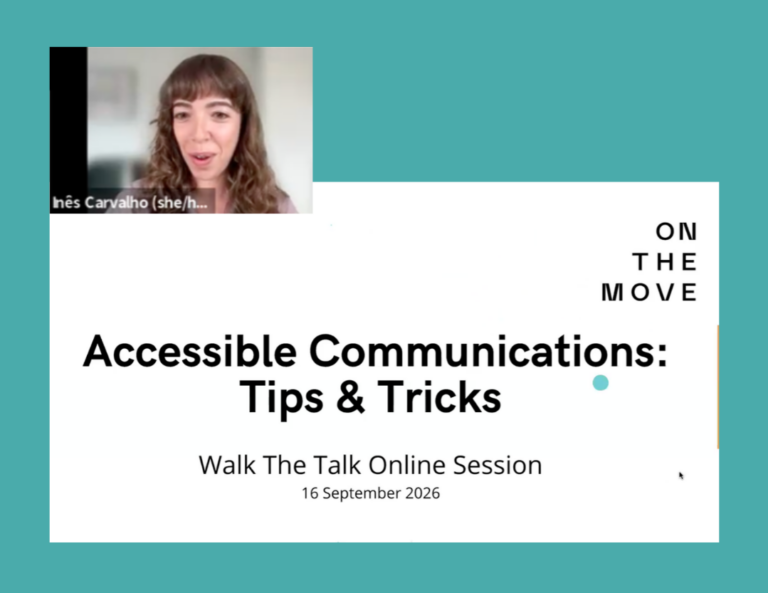
In September 2026, Diagonal facilitated Accessible Communications: Tips & Tricks, an online session for members of On the Move, the international cultural mobility network.
Led by Diagonal’s Inês Carvalho, the session invited cultural professionals to look at their communications through the lens of accessibility and consider the different barriers audiences can encounter when navigating websites, newsletters, social media, video and other digital content.
What We Explored
We started by looking at where barriers can appear in digital communications through case studies and participants’ own inputs. The session also considered different access needs, including visual, hearing, motor and physical access, as well as cognitive, learning and neurodivergent access.
From there, we explored three areas of everyday communications practice:
- Writing with accessibility in mind
We looked at how structure and language can make information easier to navigate. The emphasis wasn’t on removing complexity, but on communicating it more clearly. - Creating more accessible digital content
We explored practical considerations around alternative text and image descriptions, colour and contrast, typography, and the accessibility of audio and video content. Participants considered how choices made during both content creation and editing can influence who is able to engage with what we publish.
Our Approach
We combined practical examples, case studies, discussion and hands-on exercises that allowed participants to examine accessibility through situations they encounter in their own communications work.
This created space not only to share tools, but also to discuss the realities of implementing them across organisations with different resources, audiences and ways of working.
What They Took Away
The result was a dynamic session that moved fro questions about accessibility in communications to practical actions participants could take back into their day-to-day work.
We concluded by developing a realistic framework ready to be implemented across cultural organisations.
Professional Development at Diagonal
At Diagonal, our professional development sessions give cultural organisations and creative teams the space, time, resources and practical tools to step away from day-to-day delivery and examine how they communicate.
From communications strategy and storytelling to audience development, content creation and accessible communications, we tailor sessions around the questions, audiences and challenges each team is navigating.
Our goal isn’t simply to share a toolkit. It’s to create space for teams to reflect on their existing practices, identify what is already working and leave with practical approaches they can continue developing long after the session ends.